1. Standard Punjabi Keyboard Layout
High resolution image suitable for printing.
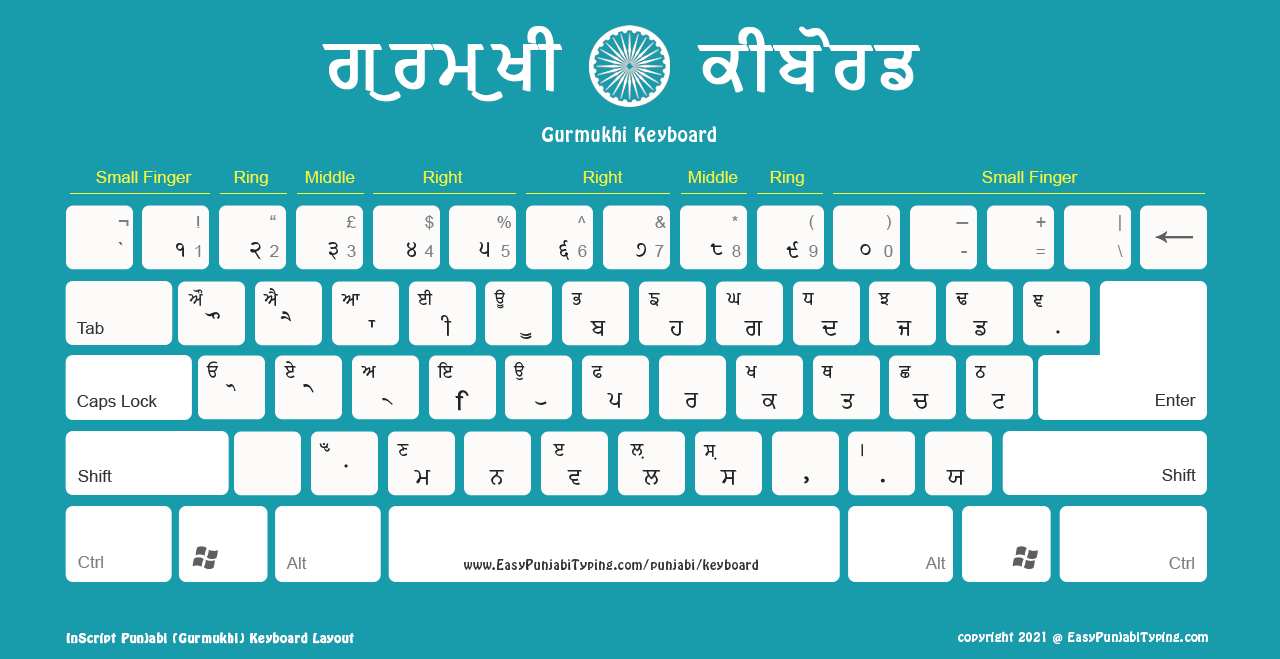
We have five different Punjabi keyboard layouts for you to download on your computer. Once downloaded — you can use it as a reference to type in Punjabi either on Word document or any other text editor. You also need to download the matching Punjabi fonts.
High resolution image suitable for printing.
High resolution image suitable for printing.
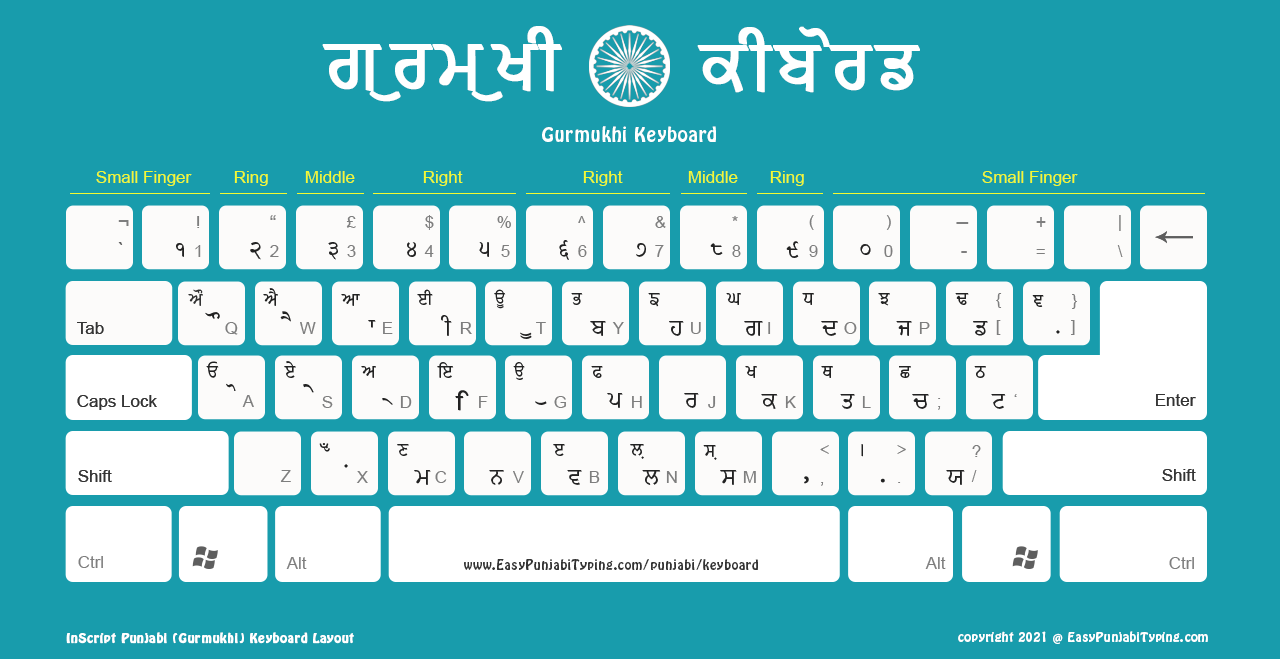
High resolution image suitable for printing.
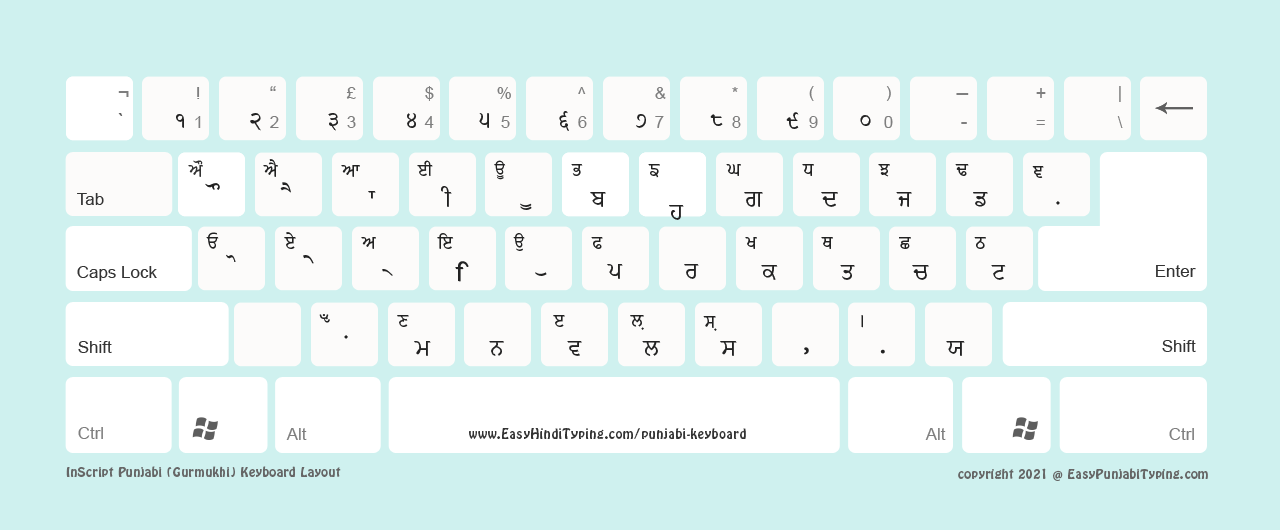
High resolution image suitable for printing.
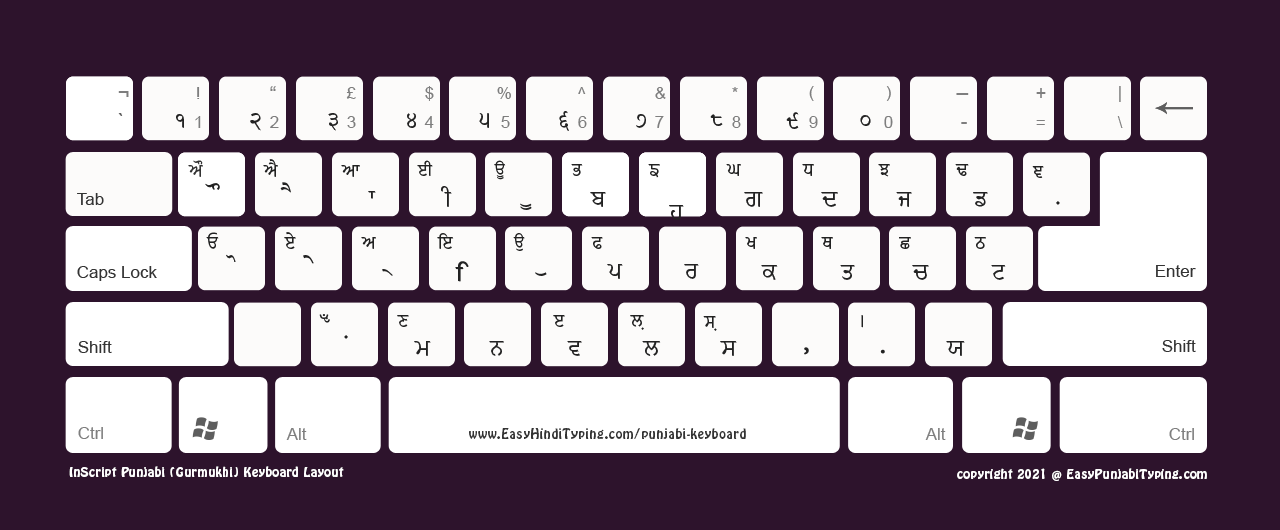
High resolution image suitable for printing.
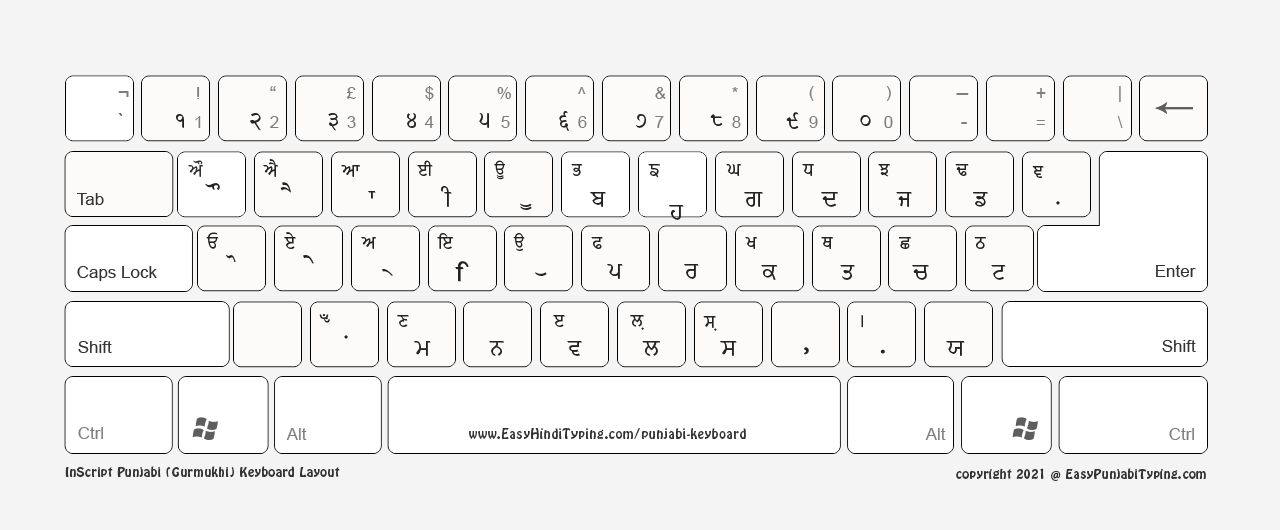
Setting up Punjabi typing is straightforward! Here's how to get started.
Install your Punjabi font — visit our comprehensive fonts collection to choose and install the perfect Gurmukhi typeface.
Save your chosen keyboard layout with this efficient method:
Select and click on any keyboard design you prefer
Right-click when the full image displays
Select "Save image as..." and choose where to store it
Set up your document workspace by opening your preferred text editor and selecting the Punjabi font you've just installed.
Start typing with confidence! Keep your keyboard image open for reference as you type in Gurmukhi.
Practical advice: Short on screen space? Our keyboards produce exceptional printed results — print one for a convenient physical reference.
Available in five different formats — choose the format that works best for typing in Punjabi (Gurmukhi).
Perfect for desktop or laptop use — high-quality layout ready for your screen.
Ideal for printing in colour — clear, vibrant, and high-resolution images.
FREE to use personally or commercially — just give credit or link back if redistributing.
To the students still turning those pages: Don't just memorize the definitions. Understand that you are the "Organism." Your heart is the "Pump." Your mind is the "Control Center." And your future is the "Evolution."
The (often published under titles like "Simply Biology" ) is a highly regarded educational resource designed to align perfectly with the Zambian Senior Secondary School Biology Syllabus . Developed over nine years of practical teaching experience by its author, this comprehensive guide simplifies complex biological concepts to help students excel in both their schoolwork and Examinations Council of Zambia (ECZ) national tests.
Introduction to the seven characteristics of life and classification.
: Comprehensive units on respiration (gaseous exchange), excretion (kidneys, lungs, skin), and homeostasis .
Don't skip the practical sections. Understand the aim, method, and observation of each experiment.
Follow the syllabus structure, starting from cell biology and moving toward more complex ecosystems.
Understanding the cell theory, differences between plant and animal cells, and organelles (nucleus, cytoplasm, chloroplasts) seen under light and electron microscopes. 2. Transport and Circulation
Grade 10 introduces students to the fundamental building blocks of life. The textbook focuses on developing academic observation skills alongside microscopic examination techniques.
Approved by the Zambian Ministry of Education for use in schools, the ZASE Biology textbook aims to provide a for Forms 1 to 4, with a particular emphasis on understanding and applying scientific concepts and principles.
Moves into the mechanics of complex life, covering transport systems in plants and humans, excretion, homeostasis, the nervous system, and the musculoskeletal system.
This section explains how essential substances are moved throughout plants and animals. Topics include:
: Sexual and asexual reproduction, plant pollination, human reproductive health, DNA, monohybrid inheritance, and mutations.
 Sambhu Raj Singh ·